Closed session
1. Board of the Hospices Civils of the City of Luxembourg: replacement of a member
2. Office social (Social welfare office): personnel matters – opinion.
3. Personnel matters – decision.
Open session
4. Questions asked by municipal councillors.
5. Traffic: permanent amendments to the traffic regulations – temporary regulations – confirmation of temporary regulations – decision.
6. Agreements – approval.
7. Work estimates – approval:
- Construction of a sports complex in Hamm – Final detailed design for the first construction phase (BA1) of the athletics stadium and football pitches in Hamm.
- Upgrade and bringing into compliance of the buildings at 336 and 338, route de Longwy in Luxembourg-Merl.
8. Urban planning:
- Limited amendment of the "Laangfur KI-10" PAG – PAP NQ – referral.
- PAP "Im Breitenbusch" in Bonnevoie – vote.
- Listing of the building at 9, rue Albert Philippe as a national cultural heritage site – opinion.
- Subdivision of land pursuant to Article 29 of the Law on municipal planning (loi concernant l'aménagement communal) – decision.
Download
9. The future of the company Carsharing Luxembourg S.A. and of carsharing in Luxembourg City – presentation and discussion.
10. Awarding of grants – decision.
11. Allocation of a grant to the AIMF – decision.
12. Legal affairs: authorisations to initiate legal proceedings – decision.
13. Creation/elimination of staff positions – decision.
Live broadcast of meetings
Summary record
Keep reading
Keep reading
Questions asked by municipal councillors
"Forêt d'Or" hotel and leisure complex, and development around the Stade de Luxembourg
Question posed by François Benoy
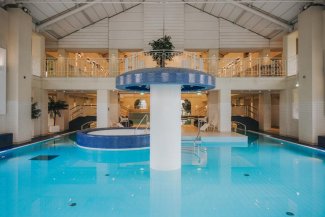
The Félix Giorgetti group is planning to build a large-scale hotel and leisure complex on <em>Boulevard de Kockelscheuer</em> opposite the stadium. This project includes a five-star hotel, a three-star hotel and an apartment hotel, with a total capacity of 522 rooms. There are also plans to include restaurants, a spa, leisure facilities, swimming pools, meeting rooms and a multipurpose room with a capacity of up to 4,476 people. Car parks with a maximum capacity of 477 spaces are also planned.
According to the government's environment portal, the environmental impact assessment (EIA) procedure was finalised through a reasoned conclusion on 9 July 2025. However, the relevant authority has requested additional information.
In its first opinion of 19 June 2023, the City wrote that "the submitted project will of course enhance Luxembourg City's attractiveness in terms of hospitality, business and leisure, but in light of current considerations regarding sustainable development and maximising energy efficiency to reduce the carbon footprint, the scale of the project should be reconsidered."
- What is the current status of this project? Are the City and the developer engaged in discussions or negotiations? When is the construction supposed to start, and when will it be completed?
- This project will have a substantial environmental impact on this area and will significantly alter the landscape. What is the College of Aldermen's current assessment of the project? Does it believe that the project could be completed as is, or are additional adjustments still needed? Does it feel that the project remains (too) big?
- Furthermore, does the College of Aldermen believe that the capital's current hotel offerings will be able to cope with this new competition without the existing businesses suffering? What studies are you basing your opinions on?
- How do the College of Aldermen and the municipal administration plan to support the implementation of this project? Does the REC area (sports and recreation) – as the plot of land is classified in the general development plan (<em>plan d'aménagement général</em> – PAG) – provide an adequate framework for the project to be seamlessly integrated into the surrounding landscape?
- Are there plans to change the PAG or draw up a special development plan (<em>plan d'aménagement particulier</em> – PAP) as part of this project? If so, when will they be submitted to the Municipal Council?
This area already houses several large facilities: the national stadium, a transfer hub with a P+R and tram, and a sports complex with golf, tennis and camping. In the future, there will also be a service centre for the tram and the outdoor municipal swimming pool that we have been talking about for decades.
- Where do things stand with the planning of those projects – namely, the tram service centre, the extension of the line to Leudelange and the outdoor pool? Do any changes need to be made to the PAG, or do any PAPs need to be drawn up? If so, when will they be submitted to the Municipal Council?
- Is there a comprehensive development plan for this area that also takes into account the interdependences with the other districts in the south-west of the city? If so, I would like to request that it be shared. If not, why hasn't such a plan been drawn up? Does the College of Aldermen share my view that it would be a good idea to draw up such a plan to guarantee the inclusion of good mobility options and green spaces in urban development?
Response provided by Mayor Lydie Polfer
On 20 October 2021, a project foreseeing the construction of a hotel complex and a large event venue was submitted to the City. We conducted an in-depth review of this project. In 2023 we sent a letter to the Ministry of the Environment (<em>Ministère de l'Environnement</em>) requesting the environmental impact assessment (EIA) that Councillor Benoy referred to. In this letter, we said we felt that the scope of the project seemed relatively large. The area in question is classified as a "recreation area" in the PAG, which in principle allows for the construction of a project of this type on the site, but with the restriction that no more than 15% of the land can be built on. I assure you that we will keep a close eye on this if a building permit is issued.
In July 2025 we received the conclusions of the EIA. The Ministry does not object to the project, but it does highlight a number of points. I won't discuss them here because the document is 19 pages long, but anyone is free to view the conclusions of the EIA. If we were to issue a building permit, it would of course take into account the observations stated in the EIA.
In June 2025, we notified the owners and the developers that the project was oversized in certain areas and needed to be reviewed. To date, no new project has been presented to us, meaning that there is no project for which we could issue a building permit. The project's completion date therefore does not depend on the City of Luxembourg.
If a building permit is requested, we will review the plans as carefully as we always do. There is no need to amend the PAG or draw up a PAP. The existing PAG stipulates in detail how this area in the southern part of the capital can be used. The current use is also in compliance with these provisions. As you know, the stadium and a large car park are already located there. The depot for our <em>Service Autobus</em> (Bus Department) is to be built nearby, and the new tram depot is also to be built a bit further away. The Chamber of Deputies will be considering the funding for the tram depot project in the next few weeks. The construction of the new tram depot will require an amendment to the PAG. No building permit has been requested yet in this regard. As for the outdoor swimming pool project, the City has purchased the last plots of land needed.
The PAG allows the implementation of all of these projects, but we will of course be cooperating closely with the Ministry of the Environment.
As for whether we need the hotel project, it is not up to us to judge if someone wants to invest in a hotel. That is the task of the Ministry of the Economy (<em>Ministère de l'Économie</em>). The Ministry of the Economy told the developer that "this type of multipurpose facility meets a growing need in our country, which is aiming to bolster its position as a preferred destination for business tourism and international professional events."
François Benoy: So there are no plans to amend the PAG as part of the projects we've mentioned here, except for the new tram depot project?
Mayor Lydie Polfer: That is correct.
François Benoy: Is there an overarching concept for this site that lists the green spaces to be protected and outlines how mobility will be set up, particularly with regard to the planned outdoor pool?
Mayor Lydie Polfer: The areas in question are completely protected by our PAG. The capital's green belt begins in this area, and we will do everything we can to protect it. We chose the location of the future outdoor swimming pool specifically because of its direct access to the tram and its proximity to the existing sports facilities. I am looking forward to the discussions we will have – hopefully very soon – in the committees and the Municipal Council when the outdoor pool project is presented. At that point we will be able to discuss all these questions in detail.
Budget for the celebrations held to mark Grand Duke Guillaume's accession to the throne
Urgent question posed by Maxime Miltgen
Numerous events were held to celebrate Grand Duke Guillaume's accession to the throne on 3 October 2025. The festivities culminated in the capital on the evening of 4 October, when the <em>Pont Grande-Duchesse Charlotte</em> ("Rout Bréck") was transformed into a stage, with the address by the new Grand Duke, a drone show and a concert bringing together 30 local artists and groups at the Glacis.
This special and magnificent event was a monumental feat of organisation. We commend the politicians and organisers for choosing to work with local artists and groups, for whom this event provided a huge platform. The event showcased the diversity of Luxembourg's cultural scene.
However, we were surprised by an article that appeared on 24 September 2025 in the Luxemburger Wort following a press conference presenting the schedule for the accession weekend. In this article, in response to a question about the budget, Mayor Polfer said "we have decided not to share the numbers for the time being." Certainly, it was specified that "98% of the creative budget is earmarked for local artists", but no information at all was provided about the total budget or the relevant budget items.
I submitted this urgent question before the "Trounwiessel", but it was not included on the agenda of the Municipal Council meeting before the event. I was told that it was not yet possible to share all the details and that the question was not considered urgent.
I think the way the questions from the press and my questions were handled is rather problematic because it is public funds that are at stake here. Taxpayers are entitled to full and transparent information on how their money is being used – this is a vital condition for ensuring that people trust public institutions. Budget transparency is a fundamental principle of good governance, and it helps to justify the projects funded by taxpayer money. In addition, it would have been advisable to submit the provisional budget for approval before the "Trounwiessel", as was done in other municipalities, such as Dudelange.
- Which budget item or items relate to the celebrations surrounding Grand Duke Guillaume's accession to the throne on 3 and 4 October 2025?
- What is the provisional amount the City budgeted for these events?
- When and in what form does the City plan to present to the public a detailed and transparent breakdown of these expenses?
- What arguments led Mayor Polfer to decide not to provide information about the budget before the celebrations?
Response provided by Mayor Lydie Polfer
The coronation was an important event for the country, one that brought people together. Grand Duke Guillaume made the most important statement of the day onstage in the evening when he said that it was not a celebration of him as a person but a celebration of the country. The people of this country gathered for these celebrations, and the tour undertaken by the Grand Ducal couple across Luxembourg highlighted its diversity.
The expenses were not stipulated in the 2025 budget because the budget was set in September–October 2024 when the structure of the "Trounwiessel" festivities had not yet been specified. The way the municipalities do their accounting allows for more flexibility than that of the state. So the revised budget allowed us to provide for the required funds. Of course, expenses can be incurred only after the Municipal Council approves the revised budget in December. The City funded the two large events held on <em>Place Guillaume II</em> (on 3 October) and at the Glacis (on 4 October).The event on <em>Place Guillaume II</em> cost around €215,000 (grandstand, decorations, barriers, etc.), while the evening celebrations at the Glacis (excluding the drone show), will cost around €4 million. Given that so far we have received only around one third of the pending invoices, the total amount may end up being slightly higher or lower. We agreed with the government and the Grand Ducal Court that it was wiser to develop an overall concept in which the City would cover the costs of the event held on the evening of 4 October at the Glacis rather than organising a separate concert in the capital, for example. The government funded the events held on the <em>Pont Rouge</em> and the drone show at the Glacis.
The biggest costs were for the stage because it was a very rare design that was without precedent in Luxembourg.
The security equipment (cement blocks, barriers, etc.) cost around €450,000, and the staff from the security firms cost around €180,000.
This brings the total costs to €4,845,000.
In addition, municipal staff worked 1,377 hours in overtime. These hours are not necessarily paid because the staff have the option of offsetting them at a later date. If we work on the assumption that half the staff in question will be paid for their overtime hours, we can estimate those costs at around €55,000 to €60,000.
Automated payment of municipal social assistance
Question posed by Christa Brömmel
During the summer, the government decided to automate payment of the cost of living benefits to people who are eligible for them. In the wake of this decision, it is natural to wonder if there will be similar automation at municipal level. The press release from the relevant ministry states that "in order to also counter the non-use of municipal social benefits, the National Solidarity Fund (<em>Fonds national de solidarité</em> – FNS) will in future automatically share with municipalities the information relating to beneficiaries of the cost of living benefits who live in the respective municipalities. In this way, the municipal administrations will also be able to institute automated payment of municipal aid based on the cost of living benefits." According to the City of Luxembourg website, this automation has not yet been set up.
- How many people living in Luxembourg City are currently on the list forwarded by the FNS?
- What is the rate of non-use in relation to solidarity benefits and the energy allowance?
- What is the amount of the municipal social benefits paid per beneficiary (individual amount) and overall (annual total amount)?
- Is there currently an automated transfer system for the solidarity benefits and/or energy allowance from the City to people who are eligible for it, based on the information shared by the FNS?
- If not, why hasn't this been set up?
- Does the College of Aldermen plan to use such an automated system in the future, particularly as the poverty rate is rising?
Response provided by Alderwoman Corinne Cahen
I would like to thank Councillor Brömmel for asking this question on a topic we have discussed within the College of Aldermen.
On 25 September 2025, the City sent 5,219 pre-completed application forms to people who are eligible for the solidarity benefits and the energy allowance. In 2024, a total of 5,368 application forms were sent out.
The FNS sends the City the list of eligible people two or three times a year because this list is constantly being updated. This poses problems for setting up an automatic system, but we are working on it.
Out of the 5,219 applications I mentioned, 3,089 were approved, 1,892 were still being processed and 238 were rejected, mainly because the people in question no longer live in Luxembourg City.
The rate of non-use has fallen steadily in the last few years and was 12% in 2024. The aid amount is determined by a municipal regulation and depends on the size of the household. In 2024, it was an average of €831 per beneficiary, with the financial aid ranging from €220 to €2,030.
The total budget was €3,623,715 in 2024. For 2025, we are already at €3,702,140 (as of 25 September), and we believe we are going to reach a total of €5,200,000.
As for introducing an automated system, up until now, the City has been sending the pre-completed forms to beneficiaries so that they can provide their bank account information. I asked the FNS about this and was told that it is possible to set up an automated system, meaning that the FNS shares the beneficiaries' bank information with us directly. An outstanding problem is that the FNS often makes several financial aid payments per year, such as after the birth of a child. We are currently studying how this can be managed. I hope these technical questions can be clarified so we can set up an automated system.
Problem related to drinking water in a school building in Kirchberg
Urgent question posed by Liudumila Branca
For some time now, the children who attend the new school in Kiem have not had access to tap water because it was declared unsafe to drink. Pallets of bottled water were placed at the entrance to the school to ensure that the pupils and staff have water. However, no official information was sent to the parents by the school administration or the City of Luxembourg. This situation is causing considerable anxiety in terms of both public health and communication with the pupils' families.
- When exactly was this school's tap water declared unsafe to drink, and why?
- What tests were done to identify the cause, and what were the results?
- What steps have been taken to remedy the situation, and when can we expect things to return to normal?
- What instructions were given to the school staff regarding water consumption and hygiene (handwashing, etc.)?
- Why weren't the parents officially notified about the situation, and what steps does the City plan to take to guarantee prompt, transparent communication in the future?
- Are there other continuing problems in the new Kiem school?
Residents have also raised the question of whether the tap water in the district is safe to drink.
Response provided by Alderman Paul Galles
I'm afraid this is a misunderstanding: the problem you have raised applies not to the new Kiem school but to the building located at 4, rue Anne Beffort – that is, the large modular structure visible on the right when you're coming from <em>Boulevard Pierre Frieden</em>. The confusion may have resulted from the fact that the City sent a letter about this not only to the staff of the building in question but also to all teachers in Kirchberg.
The City tests the drinking water regularly. During the last regular test, everything was fine. However, an additional test carried out in August in connection with the enlargement of the <em>foyer scolaire</em> found a high concentration of Legionella. The tests that were conducted focused on the bacteriological, physiochemical and spectroscopic quality of the water. A high concentration of Legionella may occur when tap water is not used for a long period of time, such as in the summer. When a second test on 16 September confirmed the results of the first test, all the relevant municipal departments were notified.
I want to highlight that the water supplied to the school building by the City's drinking water system is of excellent quality. The problem is limited to the pipes located inside the building. There is therefore no problem for the residents of the district in question.
The City then contacted the Health Inspection Department (<em>Inspection sanitaire</em>), which declared that the water was safe to drink and would not cause any problems unless it was ingested in aerosol form, such as when showering or when otherwise using hot water. However, as a precautionary measure the City decided to provide bottled water and to refrain from using the tap water in the school building until the results of the third test became available. These results are expected to be sent to the City today, 20 October. The teaching staff were notified that the water should not be drunk and that only cold water should be used. The teachers explained the situation to the children. No general letter was sent to parents because it was not a serious problem and the City simply wanted to rule out any risks.
As for the new Kiem district school, minor finishing work must still be done, as I explained during the last Municipal Council meeting.
Response provided by Alderwoman Simone Beissel
Our <em>Service Eaux</em> (Water Department) performs regular tests – three times as often as is required by law. Testing is carried out at least once a month. In August, a high concentration of Legionella was detected in the building in question, which comprises a <em>foyer scolaire</em> on the ground floor and elementary school classrooms on the first floor. At that time the relevant stakeholders, including Ms Fandel from the <em>Service Médecine scolaire</em> (School Health Department), were notified. A water quality specialist was also consulted. I want to stress that there were never any risks from drinking the tap water. Even so, it was decided to provide bottled water as a precautionary measure. Handwashing with cold water was not a problem either. There is only a problem with aerosols, particularly while showering.
Our relevant departments – the <em>Service Architecte-Maintenance</em> (Architecture and Maintenance Department) and <em>Service Foyers scolaires</em> (Childcare Department) – are now working hard to solve the problem. Rinsing the sewer lines is not sufficient because the infrastructure, particularly the taps, is somewhat old and will probably need to be partially replaced. During the autumn break (<em>Toussaint</em>), the work that can be done immediately will be undertaken. The tap water in the affected building is therefore expected to be available again for all forms of use in the near future.