General information
The Asian hornet began spreading throughout Europe in 2004. As Asian hornets prey on honeybees and other pollinators, they pose a threat to local biodiversity.
Their sting is no more painful than a European hornet's, but they are very protective of their nest.
City of Luxembourg initiatives
To curb the spread of Asian hornets, the City of Luxembourg has set up a unit within its Service Sécurité (Department of Health and Safety) tasked with removing nests found in public places and on private property, provided they are easily accessible.
Nests
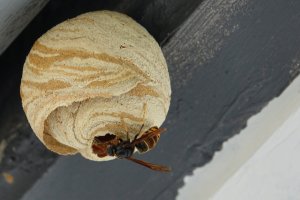
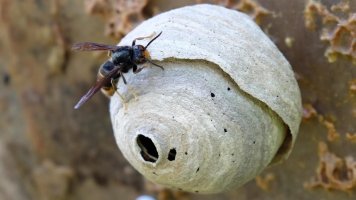
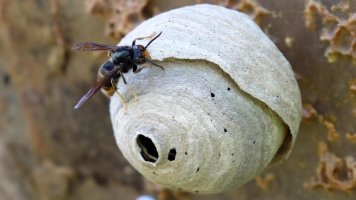
Asian hornets build two nests. The first nest – known as the primary or foundation nest – is built close to the ground (< 3 metres from the ground), between April and May, and can be found in spots that provide protection, such as letterboxes, carports, garden sheds, and roller-shutter casings.
These nests are quite small and can be easily removed by specialists with the right equipment.
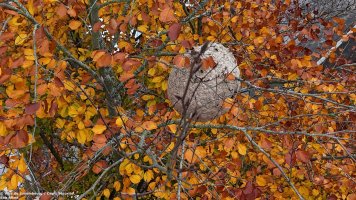
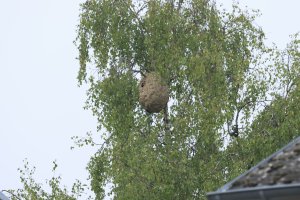
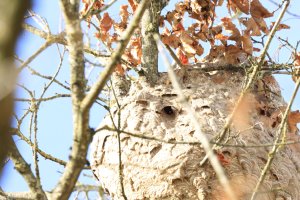
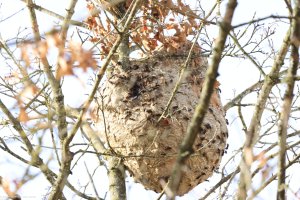
During the summer months, the hornets move out of the first nest and build a much bigger nest, known as a secondary nest. Secondary nests are usually found in hard-to-reach places, such in the crown of trees, and under the roofs of towers or tall buildings, such as church bell towers.


How to recognise them
European hornets play a very important role in promoting local biodiversity. They prey on pests and are very efficient pollinators. As such, it is important to be able to tell the difference between European hornets and Asian hornets.
At first sight:
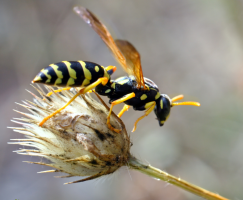
A European hornet looks like a large, black and yellow wasp, whereas an Asian hornet has a single yellow/orange band and yellow legs.

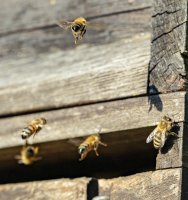
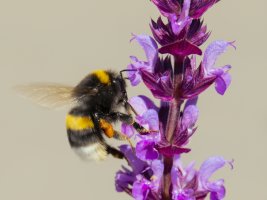
Identifying Asian hornets, wasps, bees and bumblebees


What should I do?
If you find an active Asian hornet nest, be it in your home or in a public space, you should:
- keep a distance of at least 10 metres
- do not attempt to remove it yourself
- do not use traps to try and catch them, as such traps often catch insects that are essential to maintaining the balance in local biodiversity
- if you receive multiple stings, or have an allergic reaction following a sting, consult a doctor immediately
Contact
If the nest is located within the city limits of Luxembourg City:
Contact details
Service Sécurité – Département "Vespa Velutina"<br/>(Health and Safety Department – "Vespa Velutina" unit)
- vespavelutina@vdl.lu
- Tel. : 4796-3839
When contacting us by email, you should specify where exactly the nest was found, and attach a photo of the nest.
You can also report the nest using our Report-it system.