New experimental forest
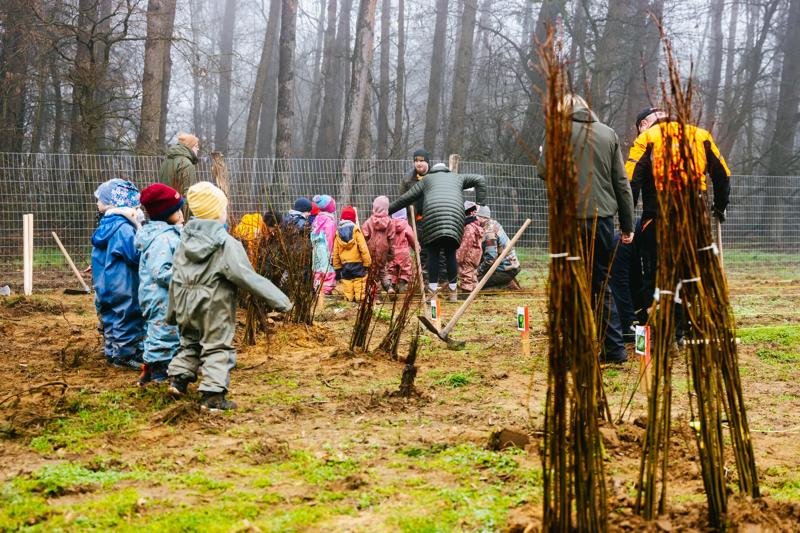
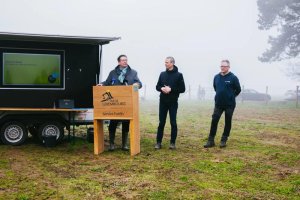
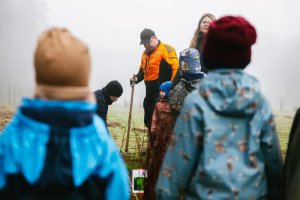
On Thursday, 26 February 2026, the City of Luxembourg, in collaboration with the Ministry of the Environment, Climate and Biodiversity (Ministère de l'Environnement, du Climat et de la Biodiversité), the Nature and Forests Agency (Administration de la nature et des forêts – ANF), and the Luxembourg Institute of Science and Technology (LIST), planted a new experimental forest as part of the FORLUX research project on the health, adaptation and sustainability of Luxembourg City forests. Children from the Bëschspillschoul took part in the planting operation.
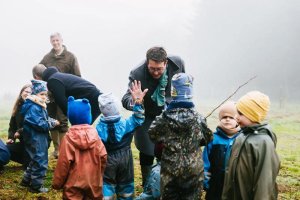
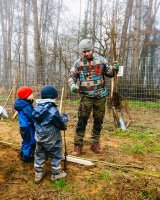
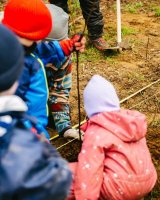
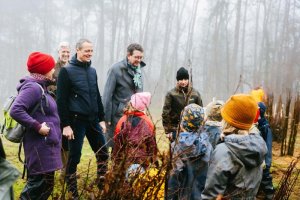
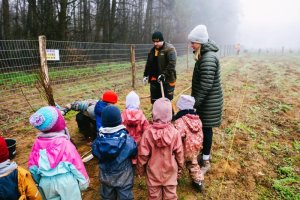
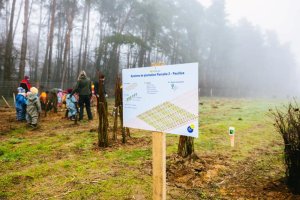
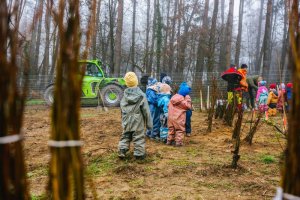
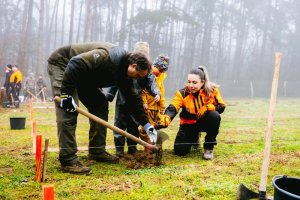
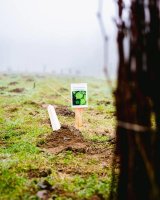
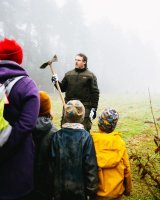


Some 3,500 trees are to be planted on a one-hectare site in Eecherfeld, in the Muhlenbach district. The site is divided into four plots, each of which is reserved for a specific combination of tree species so that researchers can study and compare different types of mixed forests:
- natural regeneration;
- combination of hardwood species;
- combination of softwood species;
- combination of hardwood and softwood species.
The various species were selected based on recommendations from the Nature and Forest Agency's Ecological Species Database, a decision-support tool used by forest managers when implementing policies aimed at adapting to climate change. Only species with a high degree of resistance to heat waves, high temperatures and frost were selected.
Sensors will be installed in all of the plots to collect data on the trees' health and surrounding air quality to determine how these are affected by weather conditions, the amount of water infiltration in the soil, and the amount of carbon stored in the trees and the soil. As such, researchers will be able to observe, in real-world conditions, how climate change affects the resilience of different types of stands and their development, and what role the trees play in safeguarding groundwater quality.
In line with the FORLUX project's focus on raising awareness, the Eecherfeld site will become a place dedicated to learning and passing on knowledge about trees and forest management. The site could eventually be used as a venue for educational visits to explain how trees function – how they grow, how their roots develop, how they interact with the soil, the physiology of their leaves, etc. – and to share the results of the observations with the general public and elementary school pupils.
Weather station
A reference climatological station (RCS) will also be set up on the site, outside the forest cover. It will provide the weather measurements needed to estimate total water balances for the municipal forests, and qualitative parameters for atmospheric deposition, which is an important source of nutrients for forest ecosystems.