Overview
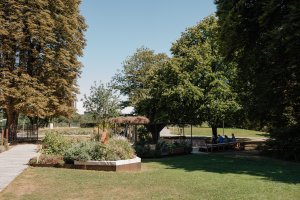
This garden features a three-tier layout. It proposes different planting solutions that are geared towards meeting current and future climate challenges, by opting for sustainability, resilience and ease of upkeep.
Gardner
- Mon Jardin – Dippach
The garden
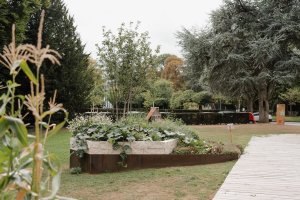
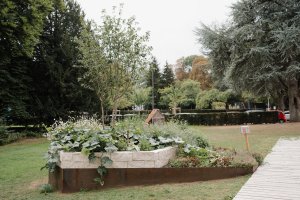
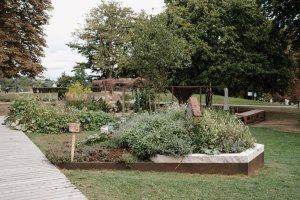
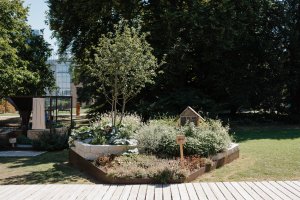
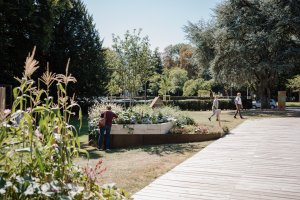
The route through the garden is laid out on three levels, each of which illustrates a different approach to accommodating climate change.
At the base is a dense carpet of sedums that adds colour to the landscape. Sedums are particularly hardy plants that require little care and, as such, epitomise vegetation that can thrive in drier conditions.
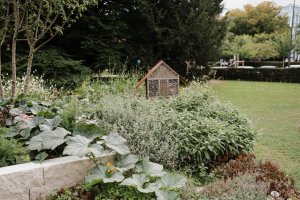
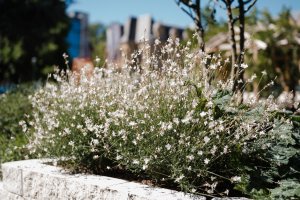
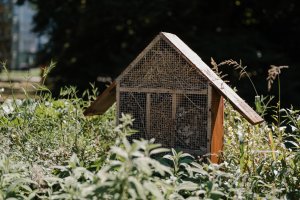
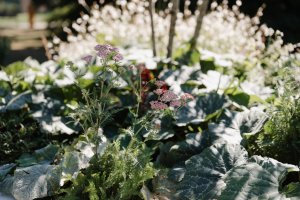
The second level features sandy soil, which is suited to deep-rooted plants. This section of the garden is also an invaluable habitat for wild bees and other pollinating insects.
At the top of the garden is a multi-stem plant, which structures the whole and marks the highest point of the overall layout. The transitions from one level to the next are signalled by dry-stone walls, which bear witness to a traditional know-how that fosters biodiversity by providing shelter and refuge for many species.
This garden illustrates an approach in which nature, technique and know-how complement each other to form landscapes of tomorrow.



Materials
- Lava stone for gravel
- Limestone for the walls
- Sand as a moisture-retaining layer
- Hardwood-tree bark
- Deadwood for insects
- Insect hotel made of wood, wire, clay and bamboo
Plants
Level 1
- Creeping sedums (all varieties: Fuldaglut, Album, Tricolor) (Sedum spurium)
- Wild thyme (varieties: Coccineus, Magic Carpet, Albus) (Thymus serpyllum)
Level 2
- Common sage (Salvia officinalis)
- Hylotelephium "Matrona" (Sedum "Matrona")
- "Six Hills Giant" catmint (Nepeta faassenii "Six Hills Giant")
- Scabiosa caucasica (Caucasian Pincushion)
- Verbena Bonariensis
Level 3
- "Evereste" crab apple (Malus "Evereste")