Core strategic areas
The activities of the City of Luxembourg's Service Autobus (Bus Department – AVL) hinge on a number of clear strategic areas, all of which are geared towards providing an effective, sustainable, and user-focused transport network. The objective is to provide a streamlined, reliable, and attractive service, supported by efficient digital services and clear communication, so that users can make informed choices as to how to travel.
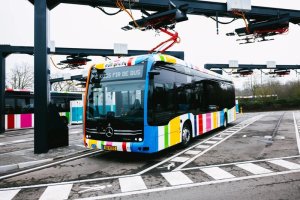
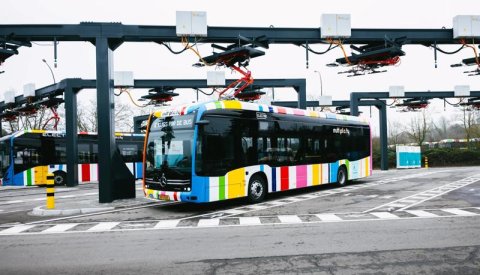
The health and safety of passengers and staff members are a priority, and are managed by motivated and committed teams. In this context, AVL continues to forge ahead in its transition to electric mobility – which is more comfortable and cleaner – while at the same time following a policy of continuous improvement.
The network actively contributes to the mobility plans of the City and nation as a whole by strengthening cooperation with various public transport stakeholders. All of these activities are ultimately geared towards one goal: customer satisfaction.

The network
The AVL network comprises 30 regular lines – 21 of which are directly managed by AVL, and 9 of which are co-managed – covering a cumulative 26.9 million kilometres every year.
It also operates 19 dedicated school bus routes and 8 City Night Bus lines, providing service that is suitable for a range of passengers with varying transport needs.
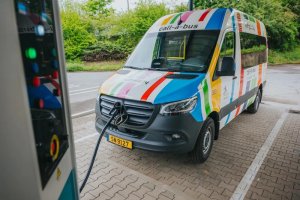
The Call-a-Bus service – designed for over-70s and persons with reduced mobility – is another service provided by AVL. In 2025, Call-a-Bus buses made 5,397 journeys for customers over the age of 70, and 2,446 journeys for passengers in a wheelchair.
In total, the network carries around 40 million passengers every year.
The fleet
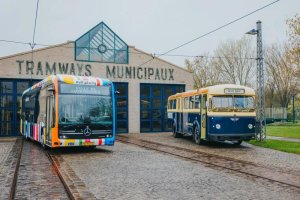
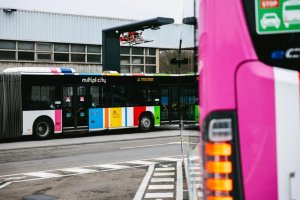
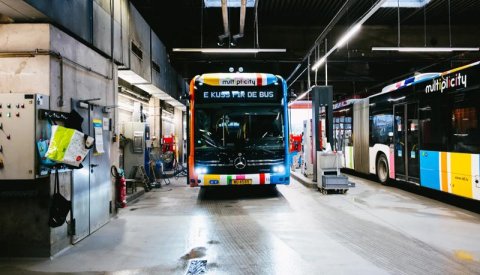
The AVL fleet is made up of 72 standard buses (52 of which are electric) and 58 articulated buses (20 of which are electric).
As part of the transition to electric mobility, AVL expects to take delivery of several electric vehicles in the near future, including: 42 articulated buses and 14 standard buses in 2026, and 15 standard buses in 2027.
In parallel, subcontractors operate 160 electric buses, including 72 standard buses, 84 articulated buses, and 4 midibuses.