Background
The first implementation of the Beggen water treatment plant took place in 1920. The site, which was selected for its geographic location, is the lowest point in the capital, meaning that wastewater would flow towards that point under the influence of gravity.
As the population grew in the 1930s, a second water treatment plant was built in Bonnevoie. It was commissioned in 1936. At around the same time – in 1939, to be precise – the Beggen plant underwent its first extension, and was extended again in 1974.
In the early 2000s, with the entry into force of new legislation, the City decided to centralise all wastewater treatment at the Beggen plant and to close down the Bonnevoie plant.
From 2007 to 2012, the Beggen water treatment plant was enlarged and modernised to meet the population's sewerage needs and comply with the European standards in force at the time.
The Beggen water treatment plant was inaugurated in October 2011 and began operations in March 2012, when the city had some 96,000 residents. At the time, its capacity was 210,000 population equivalent.
Project overview
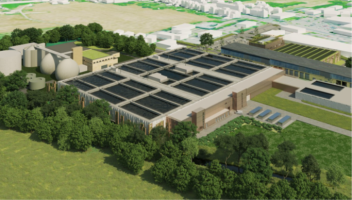
The Beggen water treatment plant plays a vital role in the treatment of wastewater for the city and several neighbouring municipalities. With the region experiencing significant population growth, along with a daily influx of commuters and cross-border workers, it became apparent that the facility would require a large extension. This project will double the water treatment capacity, from 210,000 to 450,000 population equivalent, while also meeting future environmental standards, most notably in terms of discharge quality and protecting waterways for the next 30 years.
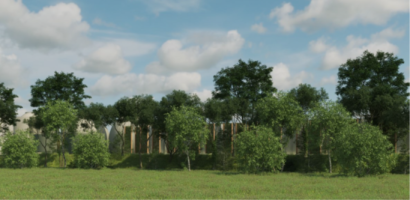
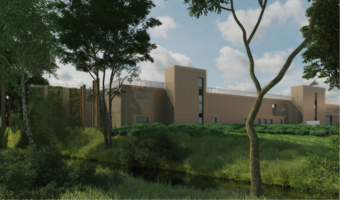
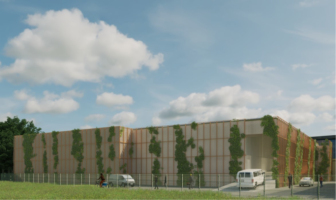
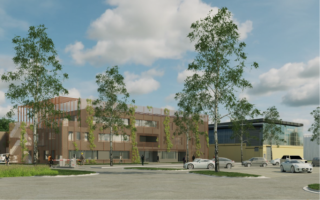
The extension includes several new treatment-infrastructure developments. In a new primary sedimentation stage, some of the pollutants in the wastewater will be removed before the biological treatment stage. In the biological treatment stage, the wastewater will undergo nitrification and denitrification in nine large SBR reactors. The project also provides for an innovative system that removes micropollutants using ozonation and activated carbon. In addition to its superior technical performance, the complex was designed to blend seamlessly into the landscape, thanks to a modern architectural style that matches its environment.


Key dates
The final project was approved by the Municipal Council in June 2018. Work began in spring 2020 and is scheduled to be completed by 2030.