History of e-mobility
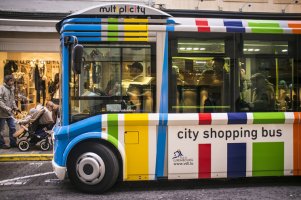
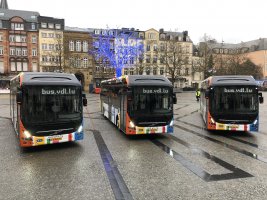
The City's first hybrid buses were introduced in 2012, marking an important step in reducing emissions.
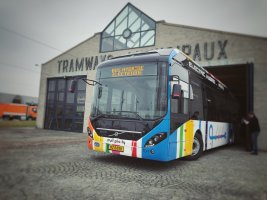
The transition continued in 2017 with the rollout of the first chargeable (rather than self-charging) hybrid electric buses, and the first moves towards incorporating new technologies across the fleet.
In 2018, in another project exploring new mobility options, the City trialled an autonomous electric shuttle.
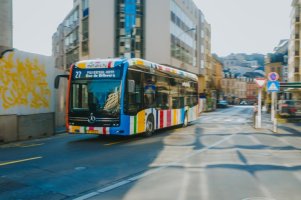
The introduction of the first fully electric bus in 2020 marked a significant milestone in the City's transition towards more sustainable forms of transport. The ultimate goal is to electrify the entire fleet by 2027.


A plus for quality of life
A quieter environment
Electric buses offer a significant reduction in noise pollution, for both passengers and local residents. With electric buses, the city is quieter and more pleasant for residents and visitors.
More comfortable
Electric buses afford a more pleasant travel experience, with smoother starts, smoother rides, and reduced on-board vibrations.
Smaller environmental footprint
In full electric mode, e-mobility eliminates CO₂, NOₓ and fine-particle emissions. E-mobility is powered exclusively by renewable electricity (naturstroum), obtained primarily from hydroelectric plants.
As such, it helps to reduce the network's overall carbon footprint.
Technologies and infrastructure
Electric buses
| Model | Type | Battery capacity | Range |
|---|---|---|---|
| Mercedes eCitaro | articulated bus | 490 kWh | up to 300 km |
| Electric Volvo | standard bus | 158.4 kWh | up to 130 km |
| Mercedes eCitaro | standard bus | 350-420 kWh | up to 350 km |


Charging stations
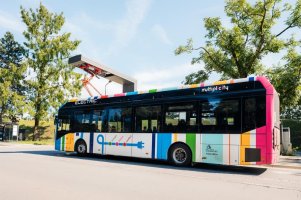
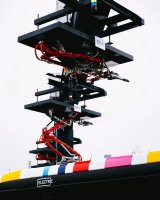
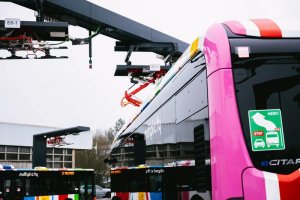
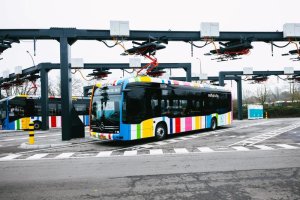
AVL uses a "Top Down" charging system, designed for fast, high-power charging of electric buses. The buses are charged automatically using inverted pantographs that hang down from a structure or mast and connect with rails on the buses' roofs.
The charging power is up to 300 kW, which is capable of delivering a full charge in just a few minutes. With this system, buses can continue to operate without the need for lengthy stops.


E-mobility FAQ
What is e-mobility in public transport, in simple terms?
"E-mobility" refers to any mode of transport that uses electricity as an energy source for propulsion – generally with a battery-powered electric engine – as an alternative to fossil fuel-powered combustion engines.
Where are the buses charged?
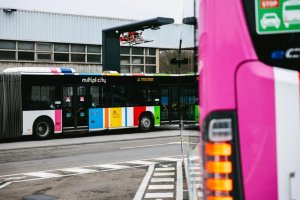
In Luxembourg City, there are currently four charging stations, plus a further two in the commune of Steinsel, and an additional charging site in the commune of Hepserange. At each station, there are at least two charging points. The charging stations in Luxembourg City are located at the terminuses of certain bus routes, which means that electric buses can be charged during service hours.
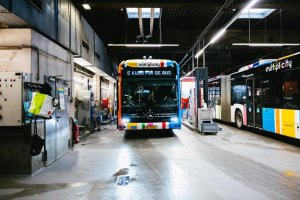
Additionally, at the bus depot, there is a large charging station with 30 charging points.
How are bus batteries charged?
For charging, we use an inverted (overhead) pantograph system. To charge, the bus simply needs to be parked beneath a charging station with a pantograph. When the driver engages the parking brake, charging begins automatically.
At the depot, buses are charged to a level that is enough for them to service their routes. Their batteries are deliberately not fully charged so as to prolong their lifespan.
What is the battery capacity?
The batteries used in standard 12-metre buses have a useable capacity of 420 kWh, whereas in 18-metre articulated buses, the useable battery capacity is 490 kWh.
This provides a charge-to-charge range of up to 350 km for standard buses, and 300 km for articulated buses.
What are the main benefits of electric buses from a user's point of view?
- They are considerably quieter, though they still have an audible signal for pedestrians' safety.
- Trips are much more comfortable. Less braking and fewer sudden accelerations make the ride a far more enjoyable experience. They do not emit the unpleasant smells associated with the combustion of diesel fuel.
- Electric engines are particularly well suited to traffic in the urban environment (with frequent stops); the same is not true of diesel engines, which provide their best yield over long distances at a steady speed.
Is the use of electric vehicles in public transport services really better for the environment?
Answer: YES
- They produce no direct exhaust emissions.
- They use regenerative braking, which reduces wear and tear on brakes, and fine-particulate emissions.
- As they are quieter, they help to reduce noise pollution in the urban environment and, consequently, cause less disruption to local fauna.
What happens if an electric bus breaks down because it has run out of charge?
The protocol is exactly the same as for a diesel bus: another bus will be sent to pick up the passengers, and the broken-down vehicle will be towed to a maintenance site.
Which make and model of vehicle has been chosen, and why?
The Mercedes eCitaro was chosen, because it met all of the criteria set out in the procurement specifications:
- Compliance with the required delivery deadlines
- Availability in both standard and articulated models
- Excellent battery performance and durability
- Previous experience in European cities with a similar geographic profile to that of Luxembourg City
- Quality of after-sales service
- Readily available spare parts
What benefits does the Mercedes eCitaro offer from the driver's point of view?
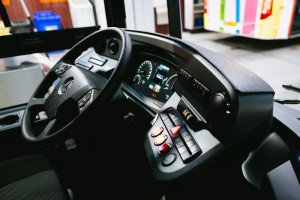
The driver's cabin has been designed to be both familiar to drivers and ergonomically efficient. As the main controls and the layout of the dashboard are similar to those of traditional buses, they are easy for drivers to get used to.
What technological improvement has been made to the City of Luxembourg's fleet of buses?
The wing mirrors have been replaced with cameras, whose feed is displayed on screens inside the vehicle, thereby improving visibility and safety.
What are the key figures regarding the City of Luxembourg's fleet of electric buses?
- Today: The fleet comprises 130 buses, including 72 electric buses
- By the end of 2026: The fleet is expected to increase to 136 buses, 129 of which will be electric
- 2027: The entire fleet will be electric
And just for the record: How are the buses in the fleet numbered, and what of the number 1?
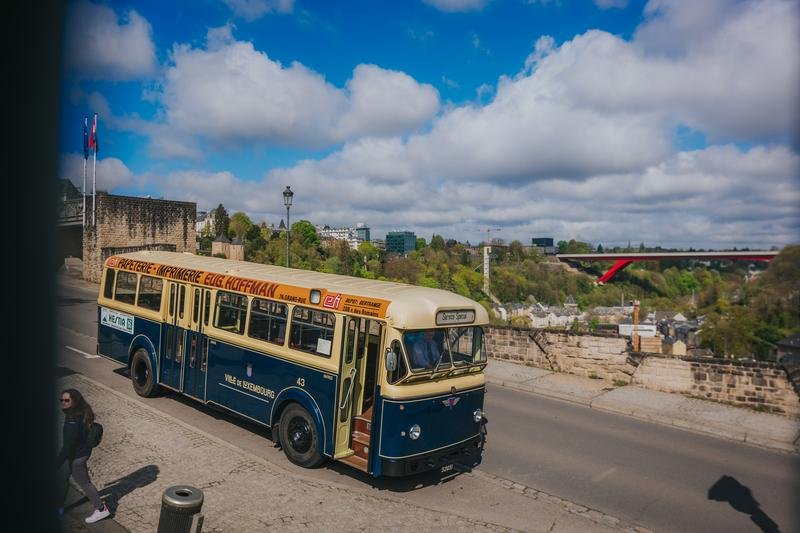
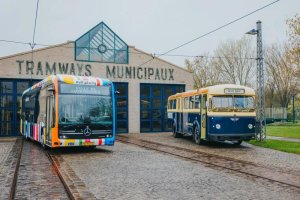
The City's first buses – Somua M4A/Breteau buses, acquired in 1926 – were numbered from 1 to 5. Numbering then continued sequentially as the fleet grew, up until 1960, when the number 116 was reached with the addition of five "AEC Reliance/Van Hool" buses, numbered 101 to 116. Over the years, certain numbers that had been withdrawn from service were reallocated, but the numbers 98, 99 and 100 were never used.
In 1969, with the arrival of the first standard VÖV buses, the numbering resumed at 120 (the numbers 117 to 119 were never used). Buses continued to be numbered in this way until October 1983, when the first Mercedes-Benz O305 was acquired, and assigned the number 233. In January 1989, with the introduction of the Mercedes O405, the numbering system restarted at 101. The process continued until December 2013, with the Volvo 7900 Hybrid numbered 297. In January 2017, with the arrival of the Volvo 7900 Electric Hybrid, the series was once again restarted at 101. The numbers 298 and 299 were never really assigned to any vehicles, although 299 was temporarily used for a test bus.
When the first articulated buses were introduced in 1979, they were numbered separately, starting from 31, with the sequence restarting many times up until 2023.
With the advent of the first fully electric articulated buses (Mercedes eCitaro G) in November 2025, the numbering system was restarted entirely – this time, with the symbolic return to number 1.
Source: https://lb.wikipedia.org/wiki/Autobus_de_la_Ville_de_Luxembourg