Learn all about bees and their natural habitat
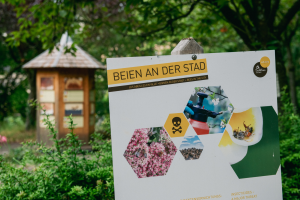
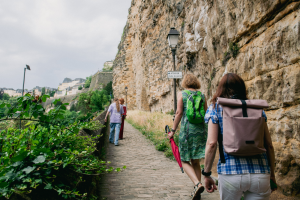
As part of its project to raise awareness for the preservation of biodiversity, the City of Luxembourg has created a public walking trail that takes visitors on a 2.5 km tour of the capital. With 12 information points along the route, walkers are introduced to the world of bees and the wealth of biodiversity in the urban environment (suitable for people aged 10 and over).
Panels in French, German and English provide information on biodiversity in the city and everything you could want to know about pollinators, such as wasps, hornets and different species of honey and wild bees, as well as their habitats, bee hive products, the issue of rising bee mortality rates, pesticides, etc.).


Download
Bee walking trail: 12 stations
1. Luxembourg City Tourist Office (LCTO): The bee and the wasp
Learn about the main differences between bees and wasps.
Download
2. Place de Clairefontaine: Biodiversity in the city
Biodiversity (bio = life, diversity = natural diversity of living organisms: plants, animals, etc.) helps protect the soil, capture pollutants from the air and improve the city's climate, thus generally enhancing quality of life. A great many food production processes rely on biodiversity. Plant and animal diversity is the key to a healthy environment.
Download
3. Rue du St Esprit: Plant boxes and flower beds
Even though most cities are generally covered in sealed surfaces, there are many ways the urban environment can promote biodiversity by supporting a rich variety of plants.
Download
4.Bisserwee: Biodiversity in stone walls
Dry stone walls are a vital habitat for all kinds of animal species. Wild bees aren't the only ones to find refuge here: countless types of insect, bats and lizards also call these walls home.
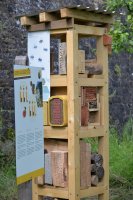
5. Biisserwee – stairway to Plateau du Rham: Insect hotel
Although the wild bee (also called solitary bee) is not as well known as the honeybee (or foraging bee), it is no less important to maintaining a healthy balance in the environment. Wild bees provide complementary pollination – a valuable contribution to biodiversity.
Download
6. Belvédère 1 – Plateau du Rham: How bees navigate
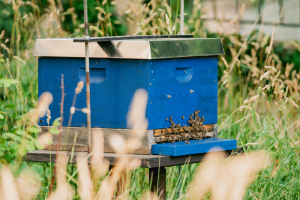
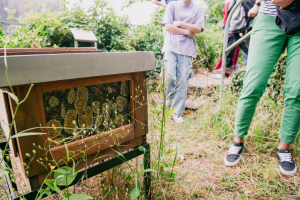
The mirror gives you an inside view of the beehive: observe the comings and goings of these fascinating creatures at the entrance to their home.
7. Belvédère 2 – plateau du Rham: Pesticides – a major threat
Bees are finding it increasingly difficult to find their way back to their beehive.
8. Plateau du Rham: A garden for pollinators
Green roofs provide many advantages. Roof-top vegetation can improve the urban climate by insulating buildings and absorbing heat, retaining rainwater in its substrate and regulating moisture through evapotranspiration (water being transferred to the atmosphere through evaporation at ground level and the transpiration of plants).
9. At the foot of the Bock promontory: The life of a honey bee.
Because forager bees are all sterile females, the queen (the only fertile female in the hive) is key to the survival of the colony.
Download
10. At the foot of the Bock promontory: Pollination
An eco-friendly city wouldn't be complete without bees! The terraces and gardens along the Alzette provide an ideal habitat for these creatures. Here, the conservation and creation of habitats such as orchards, dry stone walls, rocks and traditional vegetable gardens help to conserve biodiversity.
Download
11. Near Rue Sostène Weis: Hollow tree, natural habitat
In our part of the world, honey bee colonies have a natural tendency to make their home in hollow trees, where they are sheltered from the rain, cold, snow and wind.
While tree trunks serve as natural shelters for bees, log hives were also the first artificial shelters created by humankind, marking the first step in the long tradition of domesticating the bee.
12.Rue Plaetis: Bees and bee products
- Brandy, sweets, shampoo, soap, ointment
- Royal jelly
- fed to worker bee larvae until their fifth day of life, and to queen bee larvae throughout the larval period
- used in revitalising products
Download
Guided tour dates
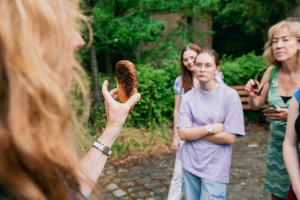
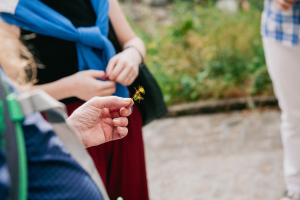
Together with its partners, the City of Luxembourg offers guided tours of the bee trail from March to September, where you can learn all about these fascinating creatures and their role in the environment.
Practical information:
- Participation is free, but registration is required: inscriptions-env@vdl.lu / Tel.: 4796-4773
- Tour duration: about 2.5 hours
- Dates and language spoken:
- Thursday, 7 May at 17:00 – French
- Saturday, 23 May at 14:00 – Luxembourgish
- Thursday, 11 June at 17:00 – English
- Saturday, 27 June at 14:00 – English (cancelled)
- Saturday, 4 July at 9:00 – English (new date)
- Thursday, 9 July at 17:00 – English
- Saturday, 25 July at 14:00 – French
- Saturday, 8 August at 14:00 – Luxembourgish
- Thursday, 20 August at 17:00 – French
- Saturday, 5 September at 14:00 – English
- Starting point: Luxembourg City Tourist Office (LCTO) on Place Guillaume II
- Tour ends at: In front of the tunnel entrance to the Grund elevator
- Limited number of participants (max. 8 people)