Programme
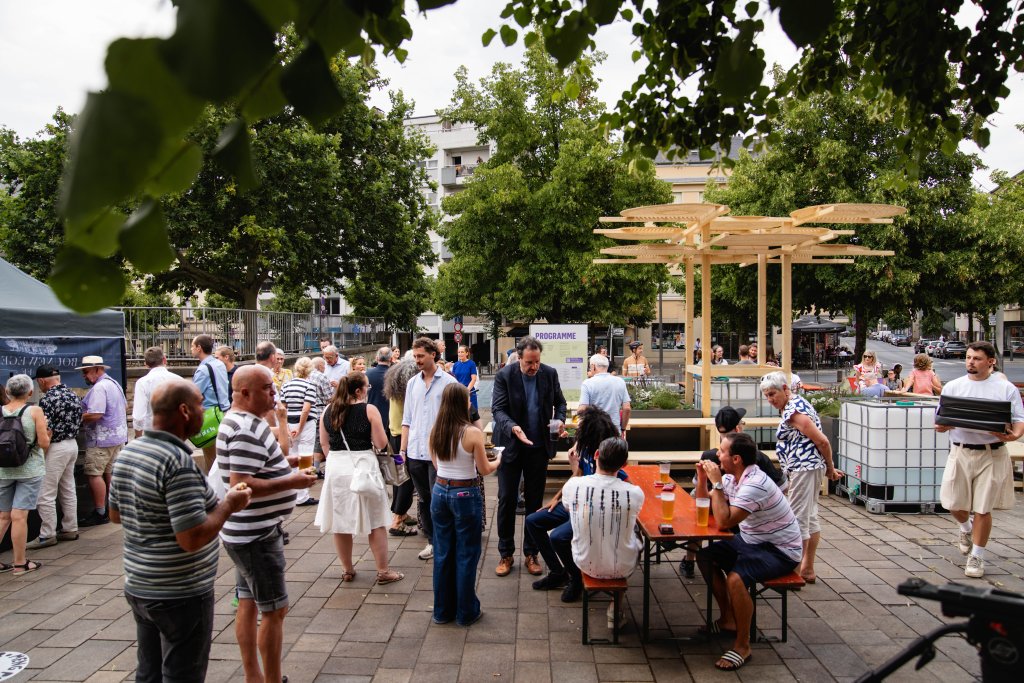
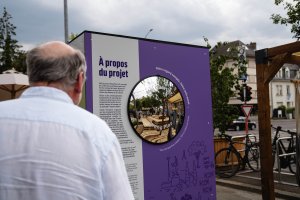
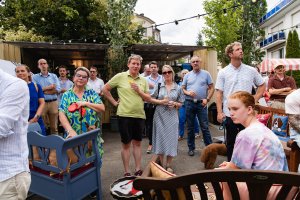
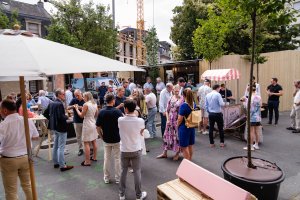
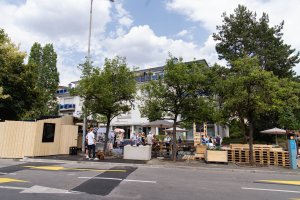
From mid-July to mid-September, Place de France will undergo a metamorphosis, becoming a place where people can meet, relax and discover a range of activities, right in the heart of the district.
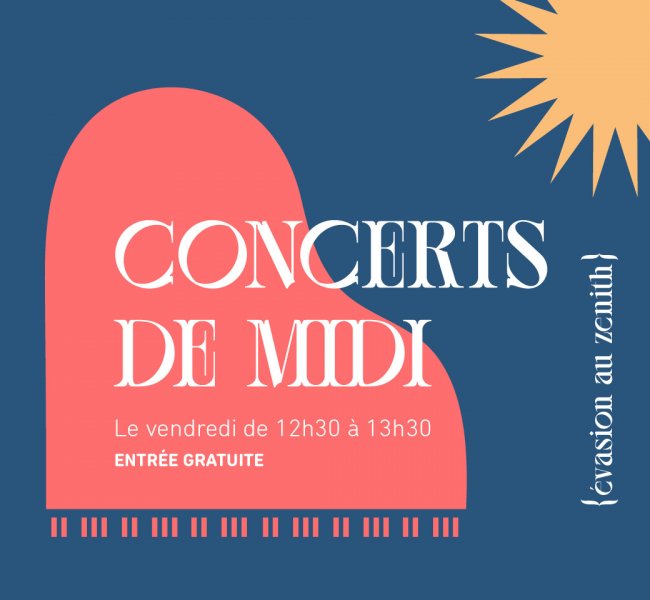
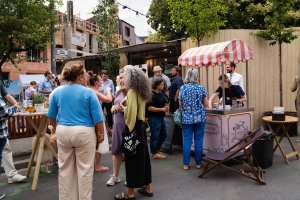
Throughout the summer, all are invited to come and enjoy the temporary installations – including the Beim Pluto refreshments stand and the Urban Piano – all free of charge.
Also, from Thursday to Sunday, the square will be the venue for a number of free events, such as workshops and live entertainment, promising an enjoyable experience for all ages.
Beim Pluto stand's opening hours:
- weekdays: 11:00–19:00
- weekends: 10:00–21:00
Main themes covered in the programme
- Opportunities to meet others
- Culture and heritage
- Nature and biodiversity
- Children and families
- Sport and well-being
July
| Date | Time | Activity | Description | Organiser | Contact |
|---|---|---|---|---|---|
| Thursday, 16 July | 16:00–21:00 | Kick-off – Grande Table Urbaine | Official launch of the "Mäi Quartier, Meng Plaz" (My Neighbourhood, My Place) initiative, bringing people together around the Big Community Table (<em>Grande Table Urbaine</em>). The College of Aldermen will be present at the event from 16:00 to 17:00. | City of Luxembourg | |
| Friday, 24 July | 15:00-16:30 | "Insect Discovery" workshop | As biodiversity continues to decline, even the smallest pockets of nature are becoming increasingly important, especially in urban environments. Join us for a close-up exploration of the fascinating world of insects as we observe and identify the different species we find. What are the differences between bees and flies? How can you tell the difference between a bug and a beetle? These are just some of the questions we will explore together during this interactive activity. | SIAS | Website |
August
| Date | Time | Activity | Description | Organiser | Contact |
|---|---|---|---|---|---|
| Sunday, 9 August | 14:30-15:30 | "La Place de France et son quartier" exhibition | The <em>Place de France</em> and its surroundings. Memories, stories and reflections: glimpses of history and literature. A friendly discussion with historian Robert L. Philippart. | SIL Merl-Belair | Website |
| Friday, 14 August | 14:00–15:00 | "The World of Bees" workshop | NB: Workshop canceled due to the heat! Discover the fascinating world of bees in this interactive workshop, where we will explore questions such as: What does a beekeeper do? How do bees build their hive, and what can we make from beeswax? How is honey made, and what different varieties are there? There's all this to discover, and much more, for visitors of all ages | Service Enseignement (Education Department) – Nature Activities | Website |
| Tuesday, 18 August | 18:00–19:30 | Reading by Nora Wagener and Jos Kayser | Barbara Wiesen | Website | |
| Thursday, 27 August | 14:30-16:00 | Tuffi on Tour – Storytime for kids | Join Tuffi to discover the joy of reading and dive into a world of captivating stories and beautiful books, right in your own neighbourhood. Come and visit us, and discover your next great adventure. The Tuffi team looks forward to welcoming you! For children of all ages. | Lëtzebuerg City Bibliothèque | Website |
September
| Date | Time | Activity | Description | Organiser | Contact |
|---|---|---|---|---|---|
| Tuesday, 1 September | 17:00–19:00 | Urban fabric delights #03 | A warm, friendly potluck gathering where participants bring and share not only dishes of food, but also ideas, experiences and thoughts on the city's urban fabric. On the menu: homemade or locally purchased dishes, open discussions and, above all, a 100% positive attitude! | Shaaf Milani-Nia / City of Luxembourg Architecture Directorate | |
| Wednesday, 2 September | 11:30–12:30 | ‘Lunchtime apéro to change the world #02’ | Bring along some snacks for a lunchtime <em>apéro </em> while you get chatting about how to make the world a better place. | Shaaf Milani-Nia / City of Luxembourg Architecture Directorate | |
| Monday, 7 September | 17:00–18:00 | Workshop: ‘La météo des émotions urbaines et dessine-moi ton quartier idéal’ | Let's talk about our district! A friendly discussion with a chance to share your everyday habits, memories, favourite likes and ideas with other local residents, and think about its future together. | Solène Silliere / City of Luxembourg Equal Opportunity Unit | |
| Friday, 11 September | 11:30–12:30 | ‘Lunchtime apéro to change the world #04’ | Bring along some snacks for a lunchtime <em>apéro </em> while you get chatting about how to make the world a better place. | Shaaf Milani-Nia / City of Luxembourg Architecture Directorate |
Gallery
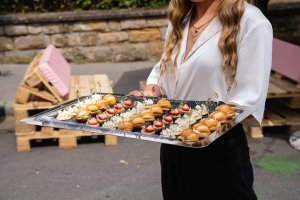
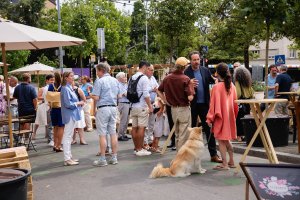
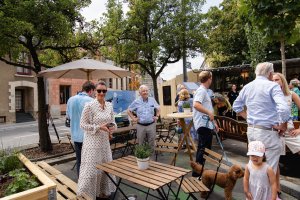
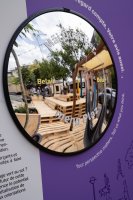


History
Whether you live in Belair, Merl or Hollerich, or are just passing through, do you know the history of this neighbourhood – and of this particular site? Here's a little background to help you better understand this iconic area of Luxembourg City, which connects the districts of Hollerich, Merl and Belair.
From medieval origins to the Fortress of Luxembourg
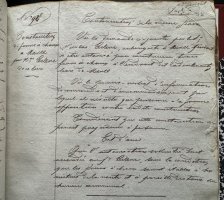
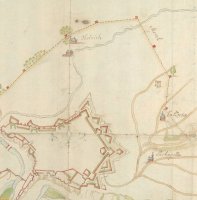
The villages of Merl and Hollerich were founded in the Middle Ages. During the era of the Fortress of Luxembourg, these settlements lay outside the city walls, and were regularly affected by armed conflicts. The passage of troops, looting and destruction repeatedly shaped their history. With the fall of the Ancien Régime and the arrival of the French Revolutionaries to annex the country in 1795, Merl and Hollerich became independent municipalities. Merl was eventually merged with Hollerich in 1823.
Before it became a connecting hub in the urban environment, at the crossroads between three districts, what is nowPlace de France was a commercial zone. There are records of lime production around Luxembourg City from the Middle Ages – in particular, around Merl, where chalk quarries and lime kilns operated. This activity also largely accounts for the position of what was to become Place de France in the 18th and 19th centuries.
On the hills behind Place de France, near the crossroads between Rue d'Oradour and Avenue Gaston Diderich today, the Luxembourg City gallows once stood. This symbol of power and justice, originally built of wood and later replaced with a stone structure, could be seen from Route de Longwy and Route d'Arlon. The gallows were used as a means of execution until 1793, when the guillotine took their place. However, old maps still show the so-called Galgenberg (Gallows Mount), on the hills where Avenue Gaston Diderich currently runs.
The urban development of Hollerich, Merl and Belair
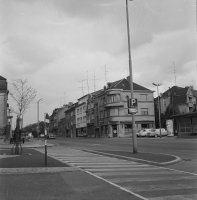
For a long time, Merl retained its village character, but Belair followed quite a different path. In the 18th century, the territory of Belair (now a district of Luxembourg City) was still largely rural, notably including the Jungblut and Daubenfeld farms, and the Sainte-Croix (Holy Cross) chapel. After the farms disappeared during the 1790s and the fortress began being dismantled as decreed in 1867, the area gradually began to see population growth and development, and was known as Neumerl (New Merl). It had 87 residents in 1887 and 243 in 1900. By 1934, its population had reached 3,200. Neumerl's major transformation into an urban district began in the 1920s, and gathered pace in the 1930s. The development of the district and of Place de France, so named in 1937, took inspiration, in large part, from the principles developed by urban planner Josef Stübben, whose plans held sway for decades over the way in which streets, squares and green spaces in the urban environment were laid out.
The name "Belair" was adopted officially in 1956 by the College of Aldermen. It refers to the former Rue Bel-Air, the central artery running through the district. In 1947, the road was renamed in honour of former Luxembourg City Mayor Gaston Diderich, who served from 1921 to 1940 and again from 1944 to 1946.
Hollerich, for its part, underwent significant urban and industrial development after the fortress was dismantled. In 1914, the municipality was raised to city status, with the name Hollerich-Bonnevoie. Six years later, it was subsumed into the growing Luxembourg City.


We want to hear what you think!
The temporary installations were designed to foster a sense of community, provide a space for leisure activities and encourage social interactions across the city's districts. We'd like to know more about your own experience:
- Did you enjoy this space?
- Was the atmosphere welcoming?
- What aspects would you like to see preserved, enhanced or expanded in the future?
Your remarks, ideas and suggestions are important to us, as they will help us assess the project and shape the future of Luxembourg City's public spaces. Your voice matters! Use this space, take part in the activities and share your views. Your feedback will help shape the future of our city's public spaces.
Form(s) to be completed
Questionnaire
Via online form
Non-authenticated method, manual signing and sending