Programme
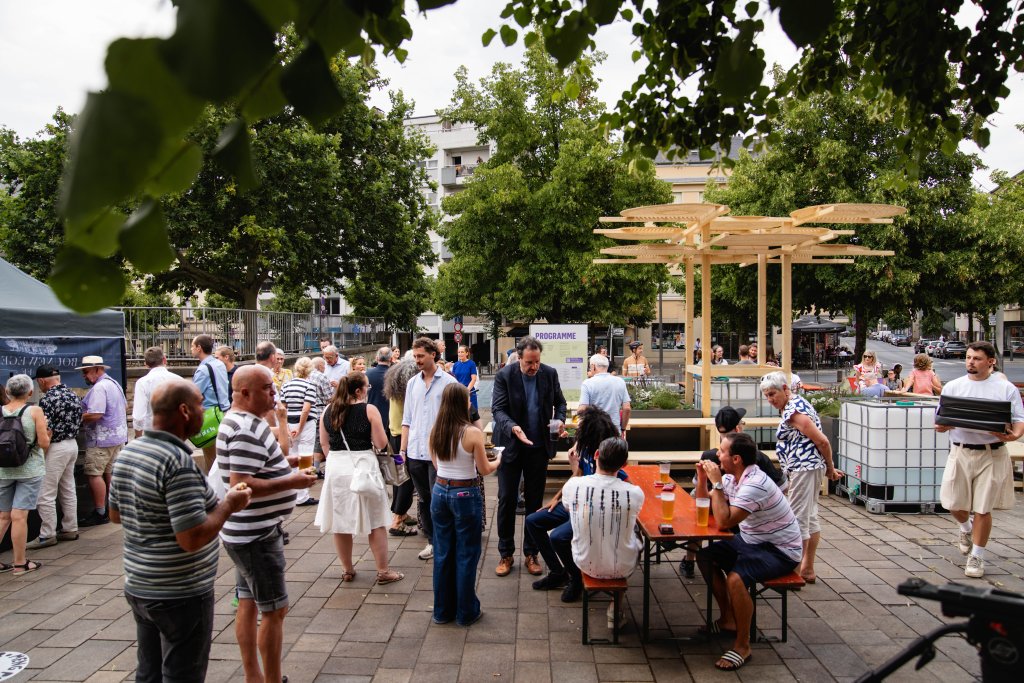
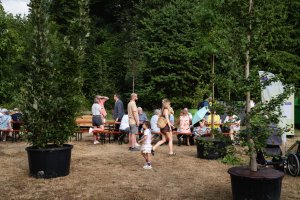
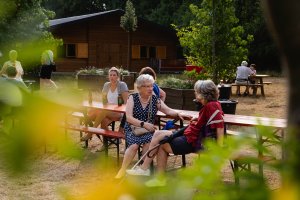
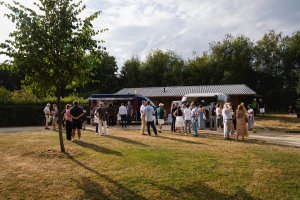
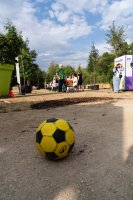
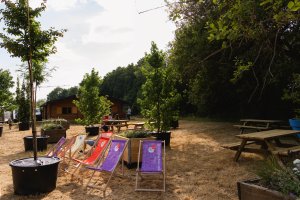
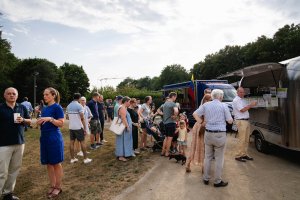
From mid-July to mid-September, the Cité jardinière (allotment gardens) will be transformed into a place where people can meet, relax and discover a range of activities, right in the heart of the district.
Throughout the summer, everyone is invited to come and enjoy the free temporary installations.
Also, from Thursday to Sunday, the gardens will be the venue for a number of free events, such as workshops and live entertainment, promising a fun experience for all ages.
Main themes covered in the programme:
- Bringing people together
- Culture and heritage
- Nature and biodiversity
- Children and families
- Sport and well-being
July
| Date | Time | Activity | Description | Organiser | Contact |
|---|---|---|---|---|---|
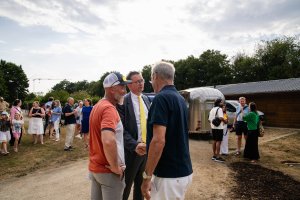
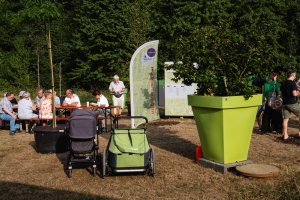
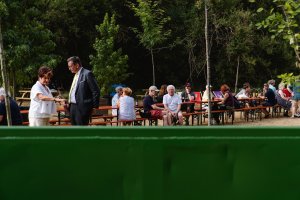
| Thursday, 16 July | 16:00–21:00 | Kick-off – Grande Table Urbaine | A chance to meet, connect and exchange ideas as part of the launch of "Mäi Quartier, Meng Plaz", centred around a large communal table open to everyone in the neighbourhood. The College of Aldermen will attend the event from 18:30 to 19:30. | City of Luxembourg | |
| Saturday, 25 July | 14:00–18:00 | Graffiti workshop for young people | Led by two graffiti artists, participants of all ages will explore graffiti techniques, try their hand at spray painting and contribute to the creation of a collaborative artwork. | Jugendhaus Cents | Website |
| Friday, 31 July | 18:00–20:00 | Awakening of the Senses | A chance to unwind in a natural setting through live handpan music, vocal journeys, mindfulness exercises and the discovery of essential oils. A sensory experience in Luxembourgish and English. | Initiative Cents | Website |
August
| Date | Time | Activity | Description | Organiser | Contact |
|---|---|---|---|---|---|
| Saturday, 1 August | 18:00–20:00 | Outdoor concert | Outdoor concert with Seb Dawant & Carisa Dias. Enjoy an outdoor musical performance in a friendly, summery atmosphere. | Initiative Cents | Website |
| Friday, 7 August | 14:00–15:00 | "D'Welt vun de Beien" workshop | Discover the fascinating world of bees through this interactive workshop, exploring the work of the beekeeper, how beehives are built, how honey is made, and the many uses of beeswax. | Service Enseignement (Education Department) – Nature Activities | Website |
| Friday, 14 August | 18:00–20:00 | HIIT and dance | A 30-minute HIIT workout followed by an hour of dance, suitable for all levels. | Jugendhaus Cents | Website |
| Sunday, 23 August | 15:00–16:00 | Handpan Flow | A sensory and musical experience where children and adults discover nature through the sounds of the handpan, musical instruments and outdoor activities. | Yolande Koster, Peo and Nancy Schlammes | |
| Thursday, 27 August | 19:00 | Musical reading | Musical reading with Karin Melchert, based on her novel <em>Hüfte, Mord & Herzgeflüster</em>. "After hip surgery, Kathrin finds herself back at the doctor's office – the very doctor she had fallen in love with years earlier. When a murder takes place at the hospital, she suddenly fears not only for her life, but also for her heart." | Karin Melchert | Website |
| Saturday, 29 August | 17:00–20:00 | Board games and magic show | A fun evening of board games and cooperative challenges, featuring magician Benito, who will lead a workshop for children and perform magic tricks for all ages. | Jugendhaus Cents | Website |
| Monday, 31 August | 17:00–18:00 | Workshop: ‘La météo des émotions urbaines et dessine-moi ton quartier idéal’ | Let's talk about our district! A friendly discussion with a chance to share your everyday habits, memories, favourite likes and ideas with other local residents, and think about its future together. | Solène Silliere / City of Luxembourg Equal Opportunity Unit |
September
| Date | Time | Activity | Description | Organiser | Organiser |
|---|---|---|---|---|---|
| Sunday, 6 September | 15:00–18:00 | Sports Day and Gaart & Heem Open Day | Explore a variety of sports activities and discover the gardens of the <em>Cité jardinière</em> during an open day designed to bring people together and encourage interaction. | Initiative Cents & Gaart & Heem | Initiative Cents: Website Gaart & Heem: Website |
| Sunday, 13 September | 18:00–20:00 | Grande Table Urbaine (Big Community Table) | Let's celebrate the end of the season together with a delicious shared meal and a concert performed by our local band, Sleepy Donkeys | Initiative Cents | Initiative Cents: Website Sleepy Donkeys: Website |
Gallery


History
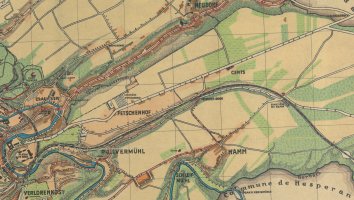
Whether you live in Cents or are just passing through, do you know the history of this neighbourhood – and of this particular site? Here are a few key facts to help you better understand this area, which is currently a bit out of the way, but will soon become a central hub for sustainable mobility in Luxembourg City.
The Cents-Fetschenhof Plateau under the Ancien Régime
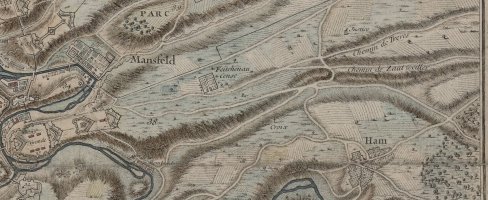
We are here on the heights overlooking the former game reserve. Despite its medieval origins, it is best known for having been incorporated into the vast estate of the castle built for the Governor of the Duchy of Luxembourg, Pierre-Ernest de Mansfeld (1517–1604), between 1563 and 1604. The game reserve, enclosed by a long wall that is still visible on 18th-century maps, encompassed not only what is now Neudorf but also extended up to the Kirchberg and Cents plateaus. The site of the current allotment gardens, for example, is still located within what used to be called the Déiregaart.
The wall had several gates, one of which was named after Octavian, son of Mansfeld, who died at age 29 in 1591 during a siege. The Octavian Gate, located on the heights of Fetschenhof, gave its name to the Tawioun trail.
On the Fetschenhof plateau stood a large farm, as well as, along the road to Trier, one of Luxembourg's three gallows, which belonged to Munster Abbey.
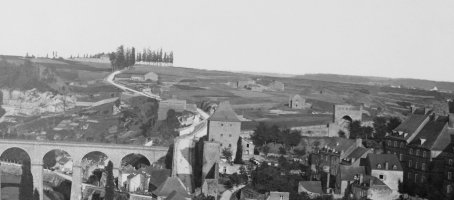
For several centuries, the plateau was primarily shaped by the development of its fortifications. Following the construction of the first military fortifications on the Rham Plateau during the Middle Ages, the defensive system was gradually extended eastward with the construction of the Rubamprez, Rumigny and Moulin forts.
The curve at the beginning of Rue de Trèves, an otherwise straight road, dates back to 1794. It bypasses the artillery position built by the Austrians following an attack by French revolutionaries from the Fetschenhof plateau, after which the farm of the same name was set on fire. It was not until the 1830s, under the Prussian garrison, that this position was reinforced and Fort Fetschenhof was built; it was later renamed Fort du Moulin in honour of the Prussian fortress commander Friedrich Ferdinand Jakob du Moulin.
The long road from village to city district
After the conquest of the Duchy of Luxembourg in 1795, the French revolutionaries incorporated the territory into the municipality of Sandweiler. Despite the decision in 1867 to dismantle the fortress, the urban development of the plateau progressed slowly. In 1873, Fetschenbour, Zens and Tavioun became part of the new municipality of Hamm, which merged with Hollerich, Eich, Rollingergrund and the City of Luxembourg in 1920. But until the 20th century, the plateau retained its rural character, with farms and a few artisans. It was in this peaceful setting that the Carmelite sisters settled in 1937.
The transformation of the rural area into an urban neighbourhood really began in the 1960s, not least with the construction of the Cité Henri Fromes. The population grew rapidly: 246 residents in 1947, 433 in 1960, 1,114 in 1970 and 2,505 in 1981. Cents currently has a population of 6,600. The growing population created a need for new infrastructure: schools, shops, a community centre and a church along the main thoroughfare, Rue de Trèves. The church was consecrated in 1980.
The first allotment gardens were created in the 1980s by Coin de Terre et Foyer near Rue Paul Albrecht, but the plot had to make way for housing. The current allotment gardens were developed by the City of Luxembourg from 1999 onwards and officially inaugurated in June 2002.


We want to hear what you think!
The temporary installations were designed to foster a sense of community, provide a space for leisure activities and encourage social interactions across the city's districts. We'd like to know more about your own experience:
- Did you enjoy this space?
- Was the atmosphere welcoming?
- What aspects would you like to see preserved, enhanced or expanded in the future?
Your remarks, ideas and suggestions are important to us, as they will help us assess the project and shape the future of Luxembourg City's public spaces. Your voice matters! Use this space, take part in the activities and share your views. Your feedback will help shape the future of our city's public spaces.
Form(s) to be completed
Questionnaire
Via online form
Non-authenticated method, manual signing and sending